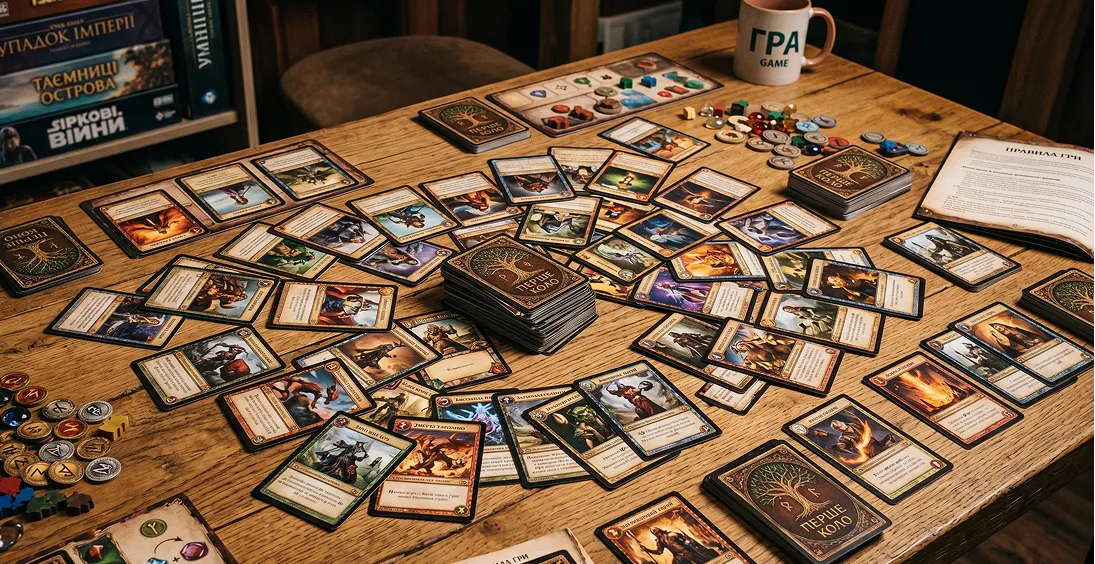
A client came to us with a finished product — a fast-paced card game for ages 25–45. In format, it's something between Monopoly and a party game: suitable for both a family evening and a group of friends. The business was established and the game was produced, so all that remained for us was to launch a Kickstarter campaign and build a base of people ready to back the project.
That's why a “lead” in this case study was not a purchase but a follow on the project's Kickstarter page. A person who follows is a potential backer who has already shown interest and is waiting for the campaign to launch.
Our task as an agency was to attract these people as cheaply as possible and in sufficient numbers.
We chose Meta (Facebook/Instagram) as the main ad channel, since Kickstarter allows you to install a pixel and optimize for conversions only through this service.
Right after launch, it became clear that the niche was quite expensive. CPM for the US audience stayed at $20–25. For comparison, in broad niches like “home goods” or “fitness,” the same metric can be half as high.
An important note here applies not only to this case. The card game niche is not uniform. Warhammer, D&D and Magic: The Gathering are products with communities of millions and demand built over many years. A specific original game has an entirely different, much narrower audience. And this directly affects the price: a smaller audience = more competition for impressions = a more expensive CPM.
The solution was to start with broad testing, collect signals and, after the first month, optimize for a specific conversion goal. In parallel — an honest conversation with the client about whether the product could sustain this acquisition cost at a price of $25–30 per game.
Pre-launch research
Before launching ads, we did research — analyzing competitors in the niche and separately going through Pinterest. This gave us an understanding of the visual language that resonates with the audience: which images, colors and game usage scenarios already work for competitors.
Based on this, we identified three audience segments:
- Young people aged 22–30 — a context of entertainment, parties and new experiences
- Couples with children — a focus on time together and quality leisure
- A broad audience — a direct offer without segment targeting
The 1-1-3 structure and creative testing
For each segment, we launched three formats at once:
Static — a direct offer with a call to follow and a showcase of the game itself. Minimal text, maximum product in frame.
Carousel — a sequential story: first the game itself, then close-ups of the cards, and finally a call to action. Works well for an audience that wants to understand the mechanics before getting interested.
Videos up to 15 seconds — not a demo of the game, but people's emotions while playing it. Laughter, surprise, excitement. This format best conveys the “feel” of the product and creates a desire to be in the same situation.
Optimization after the first month
After collecting enough data, we removed the “audience + creative” combinations that weren't delivering results and moved to separate campaigns with a conversion objective. This lets Meta's algorithm not just show ads but compete in auctions specifically among those most likely to follow. The difference in cost per lead with this approach is significant.
Results
Over two months, more than $2,200 was spent (a starting budget of $1,000, scaled after the first results).
The average cost per lead was $4–5. For the board game niche, targeting the US with a CPM of $20–25, this is an acceptable result. But this is exactly where a more important conversation began.
Conclusions
- Niche analysis: You can't evaluate a new project based on the results of previous ones. For example, the Warhammer-type card game niche has a much larger audience than this client's specific game, which directly affects acquisition cost.
- Auction optimization: After a month of creative testing, it makes sense to launch separate campaigns with a precise “conversion” objective (lead/purchase) to win auctions at the most favorable price.
- An out-of-the-box approach: If the cost per lead is too high for a $25–30 product, the problem shouldn't be sought only in traffic. We suggested the client change the business model: create their own website and earn on LTV (repeat sales) of additional card decks to cover the cost of acquiring the first customer.
We suggested the client consider an LTV model: their own website, repeat sales of additional card decks, possible expansions or a subscription. In this scenario, the first customer may be expensive, but the second and third purchases from the same customer already generate profit. In other words, in this model the Kickstarter campaign becomes an entry point into a base of loyal customers.